What Size Shed Do You Actually Need? Here’s a Simple Guide
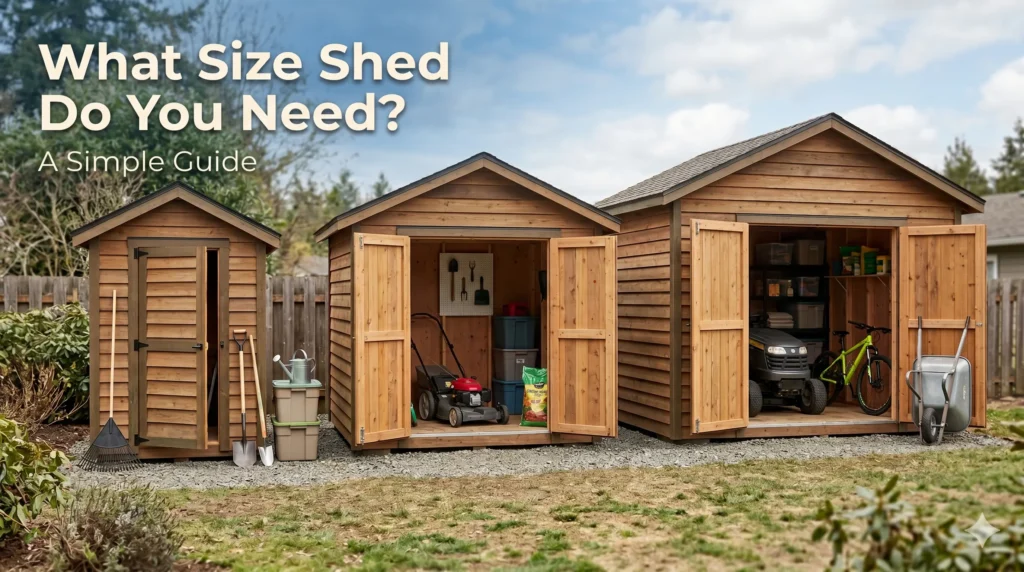
What size shed do I need? This is one of the first questions most homeowners ask before starting a backyard storage project. The right answer depends on what you plan to store, how much yard space you have, and whether you want extra room for future tools, bikes, garden equipment, or seasonal items.
Choosing the right shed size sounds simple, but it is one of the easiest parts of the project to underestimate. Go too small, and the shed fills up almost immediately. Go too large, and you may waste money, materials, and valuable backyard space.
This guide will help you choose a practical shed size based on real storage needs, not guesswork. By the end, you should have a clearer idea of whether you need a small tool shed, a medium backyard storage shed, or a larger shed with space for shelving and future use.
What Size Shed Do I Need? Quick Answer
For basic garden tools and compact storage, a 5×4 ft (1500×1200 mm) shed may be enough. For a lawn mower, bikes, bins, and general backyard storage, most homeowners are better served by a 6×8 ft (1800×2400 mm) or 8×10 ft (2400×3000 mm) shed.
If you want shelves, a small workbench, or extra room for future storage, an 8×10 ft (2400×3000 mm) or 10×12 ft (3000×3600 mm) shed is usually a safer choice.
The best shed size is not just the one that fits your yard. It is the one that fits what you own now, what you may add later, and how easily you want to move around inside.
Start With What You Actually Need to Store
Before choosing a shed size, make a simple list of everything you want to keep inside. Do not only think about what you own today. Think about what you are likely to add in the next 1–2 years.
Common shed storage items include:
- Lawn mower
- Bicycles
- Garden tools
- Storage bins
- Seasonal decorations
- Outdoor furniture cushions
- Hoses, rakes, shovels, and trimmers
- Power tools or small workshop equipment
A good rule is to group your items by size and function. Large floor items like lawn mowers and bikes need open space. Smaller items can often be stored vertically on shelves or wall hooks.
If you are still asking what size shed do I need, start by measuring your largest items first. The biggest objects usually determine the minimum shed footprint.
Choose a Shed Size That Gives You Room to Move
A shed should not be packed from wall to wall. Even if everything technically fits, the space will be frustrating if you cannot reach anything easily.
Plan for at least 24 inches (600 mm) of walking space where possible. This makes it easier to open boxes, move a lawn mower, reach shelves, and grab tools without dragging half the shed outside first.
Ask yourself one simple question:
Can I walk in, grab what I need, and get out in under 10 seconds?
If the answer is no, the shed may be too small or poorly organized. A slightly larger shed with good access can feel much better than a smaller shed that is packed too tightly.
Don’t Forget Workspace and Future Use
Many sheds start as storage spaces but slowly become something more useful. You may eventually want a small workbench, a potting area, a tool wall, or a hobby corner.
If you plan to do anything inside the shed besides storing items, leave extra open floor space. Even a small workbench needs comfortable access in front of it.
For light workspace use, try to leave at least 2–4 ft² (0.2–0.4 m²) of clear working space. For a proper hobby or DIY setup, consider going one size larger than your first instinct.
This is where many first-time builders regret choosing the smallest possible shed. It may save money upfront, but it often limits how useful the shed feels later.
Compare Common Shed Sizes
Here is a simple shed size guide to help you compare typical backyard storage options. Dimensions are approximate and may vary depending on the plan, wall thickness, roof overhang, and layout.
| Shed Size | Approx. Area | Best For |
|---|---|---|
| 5×4 ft (1500×1200 mm) | 20 ft² / 1.8 m² | Small garden tools, hoses, trash bins, and compact storage |
| 6×8 ft (1800×2400 mm) | 48 ft² / 4.5 m² | Lawn mower, garden tools, storage bins, and one or two bikes |
| 8×10 ft (2400×3000 mm) | 80 ft² / 7.4 m² | Lawn mower, bikes, shelving, tools, and general backyard storage |
| 10×12 ft (3000×3600 mm) | 120 ft² / 11.1 m² | Small workshop, sports gear, larger equipment, and organized shelving |
| 12×16 ft (3600×4800 mm) | 192 ft² / 17.8 m² | Hobby space, garden hub, serious DIY setup, and larger storage needs |
Do not choose based on floor area alone. A well-planned shed with shelves, wall hooks, and vertical storage can feel much larger than a bigger shed with poor organization.
Check Local Rules Before You Build
Before you finalize your shed size, check your local building rules, permit requirements, and setback limits. Some areas allow small detached sheds without a permit, while others have stricter rules based on size, height, foundation type, or placement.
Things to check include:
- Maximum shed size without a permit
- Required distance from fences, property lines, and buildings
- Allowed shed height
- Foundation requirements
- HOA or neighborhood restrictions
In some building codes, small detached accessory structures may be exempt from a permit up to a certain size, but this varies by location and local amendments. You can use the International Residential Code Section R105.2 as a general reference, but always confirm the final requirements with your local building authority.
For a deeper checklist, read our guide: Do I Need a Permit to Build a Shed?
Plan for Future Storage, Not Just Today
A common mistake is choosing a shed size based only on what you need to store right now. In reality, most sheds fill up faster than expected.
Garden tools, seasonal decorations, outdoor furniture cushions, bikes, hoses, and power tools can quickly take over the available space. If you are unsure between two sizes, choosing the slightly larger option is usually safer.
Extra space makes it easier to move around inside the shed, add shelving, and keep items organized instead of stacking everything on the floor.
A shed should not only fit your current items. It should also give you enough room to use the space comfortably over time.
Match the Shed Size to the Foundation
The bigger the shed, the more important the foundation becomes. A small tool shed may work on a simple gravel pad or blocks in the right conditions, but larger sheds need more reliable support.
Ground slope, drainage, soil type, frost risk, and intended use all affect the best foundation choice. A shed used only for light garden storage is different from a shed used as a workshop or equipment space.
Before building, use the CraftFrame Shed Foundation Selector to compare foundation options based on your shed size and site conditions.
Think About Budget Before Choosing the Final Size
A larger shed usually means more lumber, more roofing, more fasteners, a larger foundation, and more finishing materials. It may also take longer to build.
That does not mean you should always choose the smallest option. It means you should choose the smallest shed that still works comfortably for your real storage needs.
If budget is a major factor, compare the cost difference between one size and the next. Sometimes going slightly larger adds only a moderate material cost but makes the shed much more useful long-term.
For a deeper cost breakdown, read our guide: How Much Does It Really Cost to Build a Shed?
Choosing the Right Plan Makes the Build Easier
Once you know the shed size you need, the rest of the project becomes much easier. A clear plan helps you avoid overbuying materials, making wrong cuts, or changing decisions halfway through the build.
A good shed plan should include:
- Clear dimensions in both inches and millimeters
- A complete material list
- Cut lengths
- Step-by-step assembly logic
- Foundation and framing guidance
- Practical details for doors, walls, roof, and storage layout
With a clear plan, building becomes less about guessing and more about following a logical sequence. The goal is not to make the project complicated. The goal is to make each decision clear before you cut the first board.
FAQ: What Size Shed Do I Need?
Is a 6×8 ft shed big enough?
A 6×8 ft (1800×2400 mm) shed is usually enough for a lawn mower, garden tools, storage bins, and a small amount of seasonal storage. It may feel tight if you also need bikes, shelving, or workspace.
Is an 8×10 ft shed a good size?
Yes. An 8×10 ft (2400×3000 mm) shed is one of the most practical sizes for general backyard storage. It gives enough room for a lawn mower, bikes, shelves, tools, and some open walking space.
Should I build a bigger shed than I think I need?
If you are choosing between two sizes, the slightly larger option is often better. Most sheds fill up over time, and extra space makes the shed easier to organize and use.
What is the best shed size for a small workshop?
For a small workbench or hobby space, an 8×10 ft (2400×3000 mm) shed is usually the minimum practical size. A 10×12 ft (3000×3600 mm) shed gives more comfortable space for tools, shelving, and movement.
What size shed do I need for bikes and a lawn mower?
For a lawn mower and one or two bikes, a 6×8 ft (1800×2400 mm) shed can work, but an 8×10 ft (2400×3000 mm) shed will usually feel more comfortable. The larger size gives you better access and more room for shelves or additional tools.
Final Thought
The right shed size is not only about what you own today. It is about how your backyard storage needs may change over time.
Measure your largest items, leave room to move, check local rules, and plan for future storage before you build.
If you are still wondering what size shed do I need, choose the size that gives you enough storage without turning your shed into a cramped box. A well-planned shed should make your backyard easier to use, not harder.